The province of Sindh in Pakistan is often described as a land of mystics where the message of peace and brotherhood has been preached for centuries . The province’s association with Sufism is so deep that it has become a primary marker of Sindhi identity for both Muslims and Hindus . This spiritual landscape is dotted with the shrines of countless saints, with a popular legend stating that 125,000 of them are buried on Makli Hill near Thatta alone. The major sufi shrines in Sindh include Lal Shahbaz Qalandar at Sehwan, Shah Abdul Latif at Bhit Shah, Abdullah Shah Ghazi at Karachi and Sachal Sarmast near Khairpur. I grew up in Karachi near Abdullah Shah Ghazi and visited Sehwan and Bhit Shah in summer of 2025.
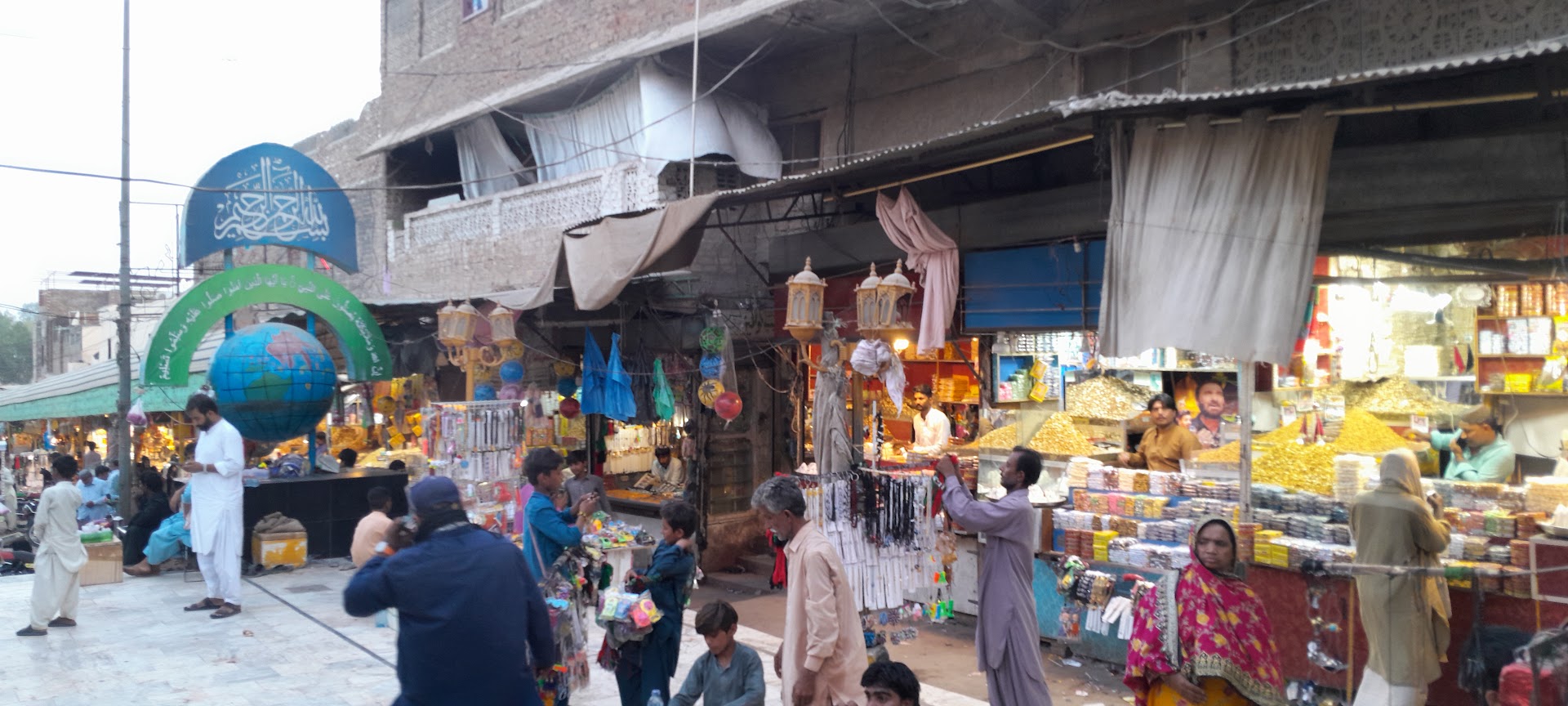
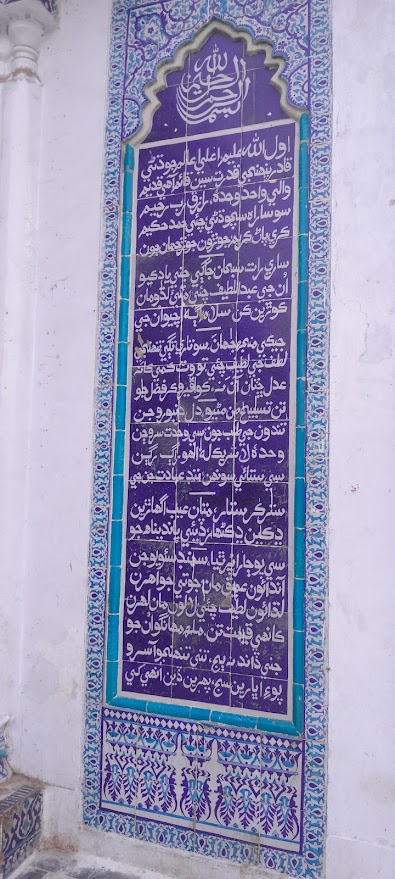
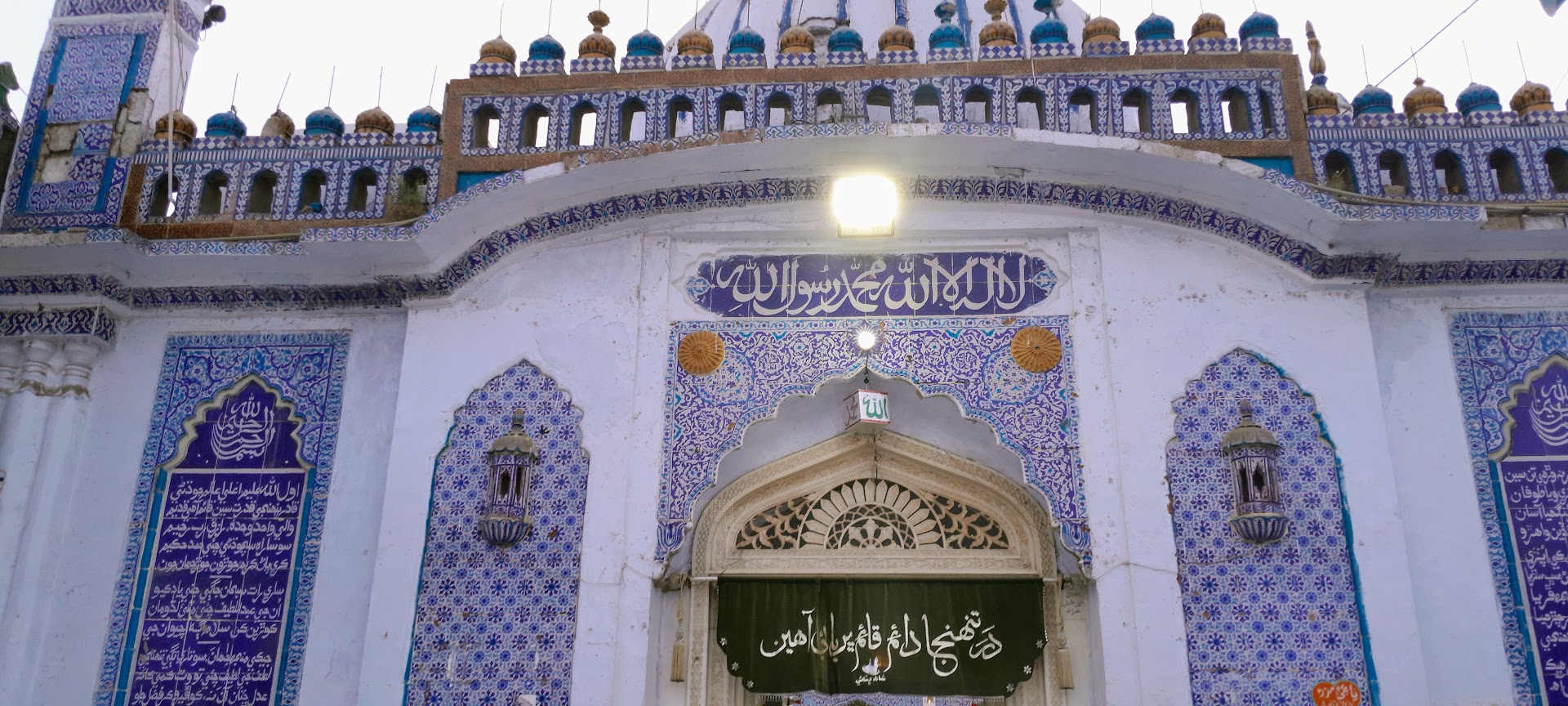
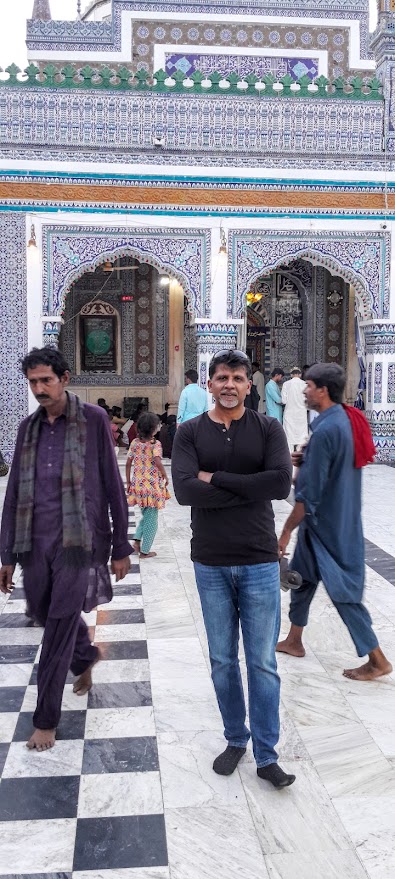
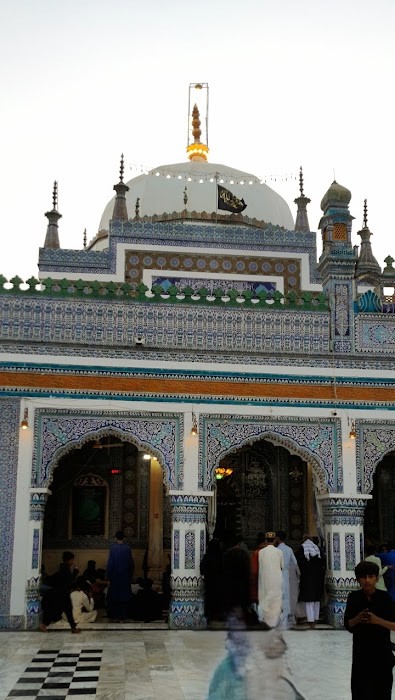
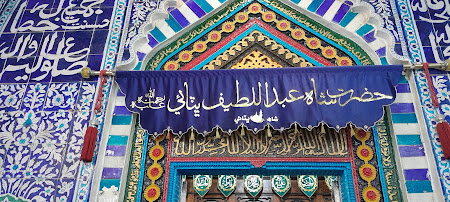
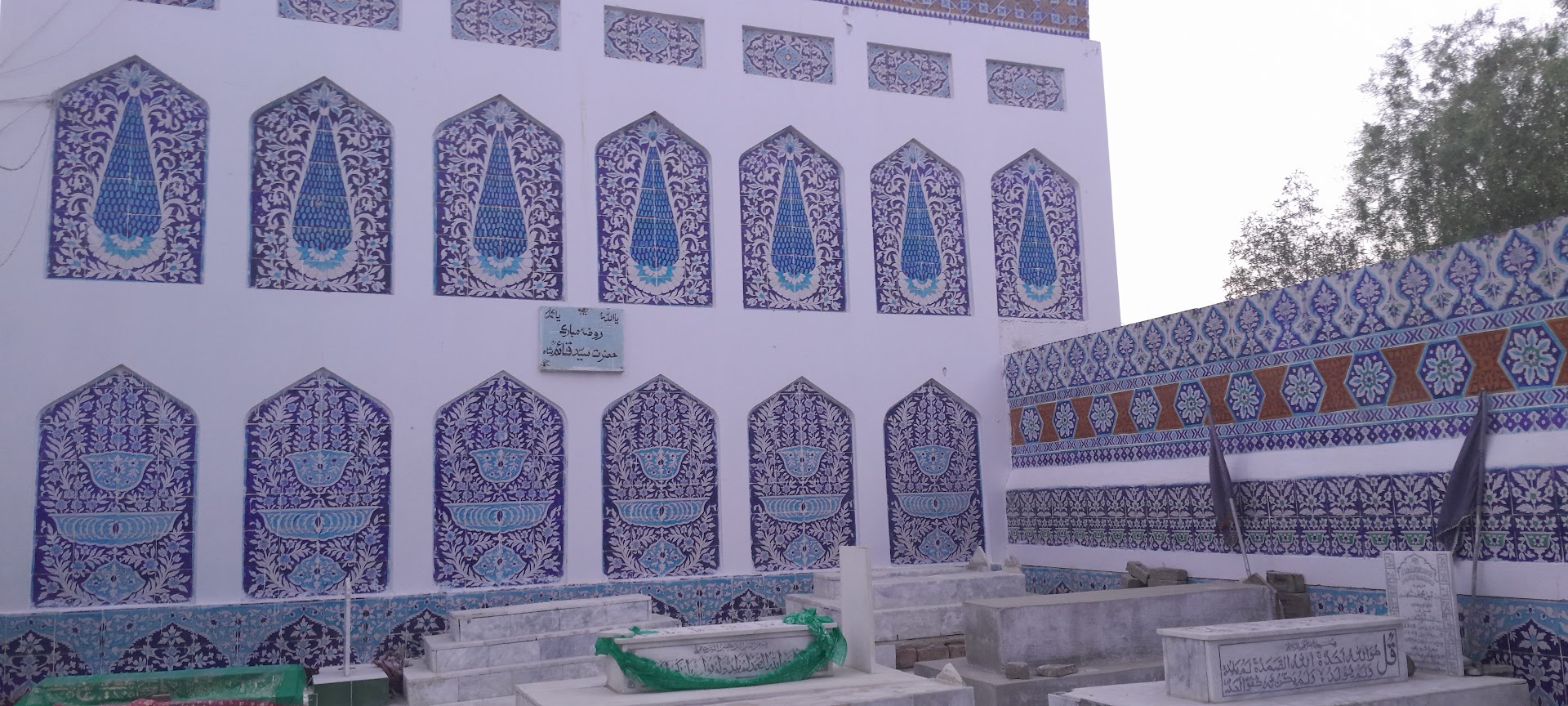
I was conducting a math training workshop in Hyderabad which provided an excellent chance to visit Bhit Shah which is about an hours drive from the city. The town’s entrance is marked by two large, distinctive blue arches and the main road leading to the shrine is a vibrant bazaar, alive with color and the scent of incense and fresh food. Shops overflow with traditional Sindhi ajrak shawls, intricate hand-painted pottery, and delicate limestone toys along with sweets and flowers which are used as offerings at the shrine. Shah Latif’s poetry adorn the market walls leading to the shrine.
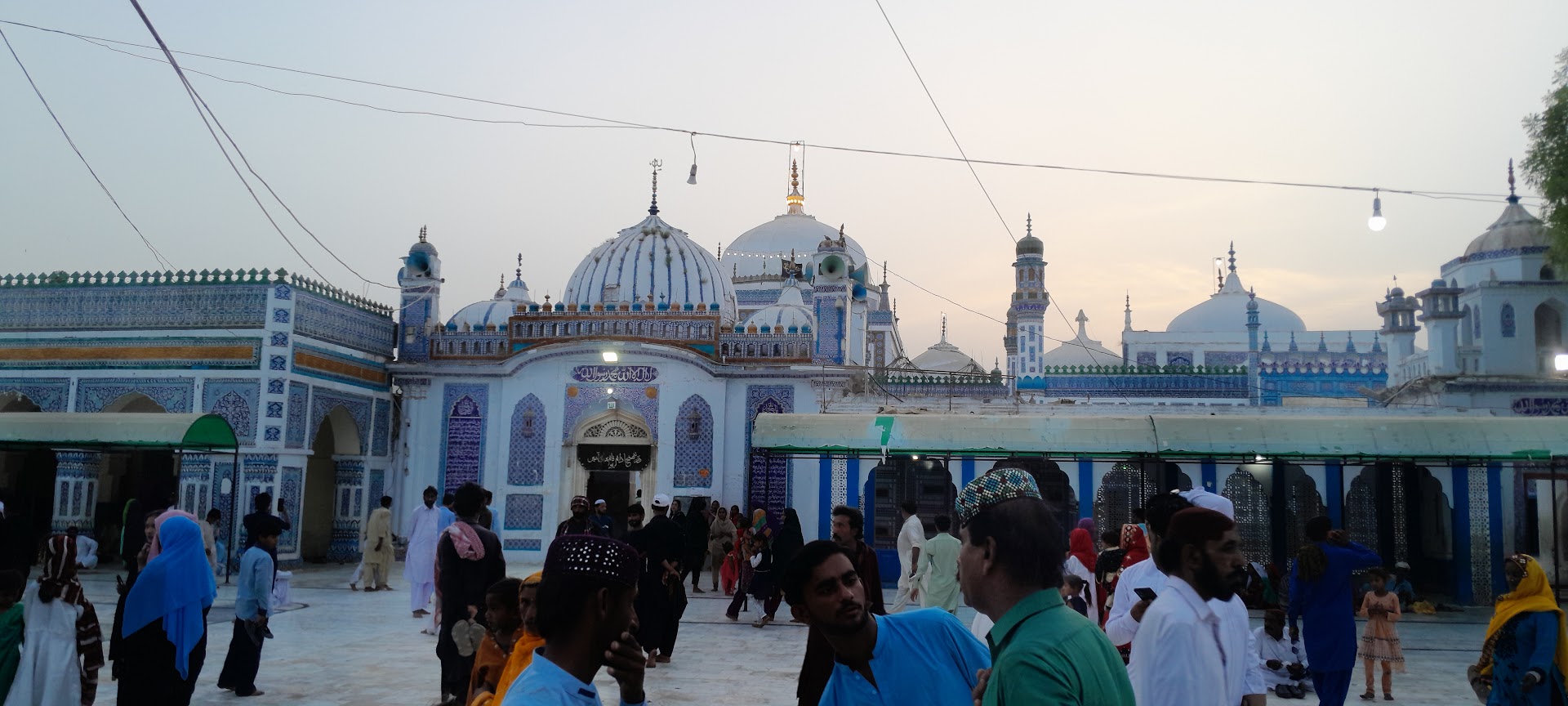
The shrine of Shah Abdul Latif Bhittai is a stunning example of 18th-century Indo-Islamic architecture. It was built in 1772 by Mian Ghulam Shah Kalhoro, the then-ruler of Sindh . The first thing that strikes you is the exterior, which is elaborately decorated with intricate, glazed qashani tiles in traditional Persian-style patterns of blue, turquoise, and white. The complex is thoughtfully organized into concentric zones . After removing your shoes, you enter a large outer courtyard, a multifunctional public space lined with porticos. Here, you’ll find facilities like a dispensary, a bookshop, an office, and a musafir khana (guest house) for pilgrims . This area serves as a transition space between the town and the more sacred inner areas. Passing through a large gateway, you enter the inner court. This space is dominated by the mausoleum and a mosque, both adorned with beautiful tile work and crowned with prominent domes . The atmosphere shifts here; it is quieter, more focused on devotion. Musicians, known as fakirs, often sit facing the main tomb entrance under a porch, their performance a daily tribute to the saint . These musicians, clad in black, carry on a 300-year-old tradition, singing stanzas from the saint’s poetry and playing simple instruments like the tambooro. The final resting place of Shah Abdul Latif Bhittai is under the main dome of the mausoleum . The grave itself is enclosed by an exquisitely carved wooden screen and lies under a beautifully painted fresco on the ceiling, which is decorated with intricate geometric patterns . The walls are covered with lovely engravings. Daily sama (spiritual concert) performances are held in the inner court after the evening prayers . Listening to the fakirs sing the verses of the Shah Jo Risalo is the highlight of any visit.
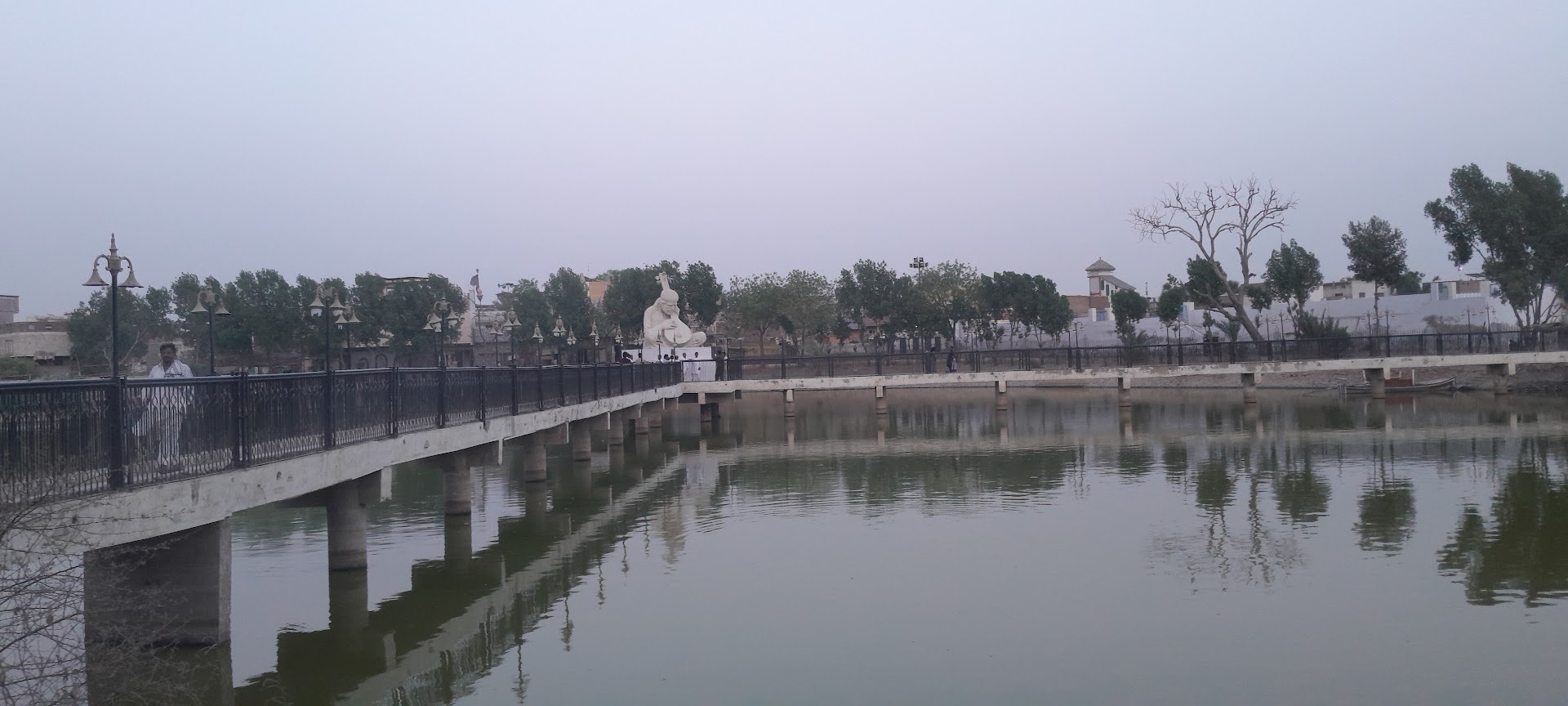
A 16-foot-high statue of Shah Abdul Latif Bhittai was unveiled during his 274th annual Urs (death anniversary) celebrations . The statue was sculpted by Nadir Ali Jamali, an artist associated with the fine arts department of the University of Sindh, it is now installed at the adjacent Karar Lake and provides a place of reflective contemplation.
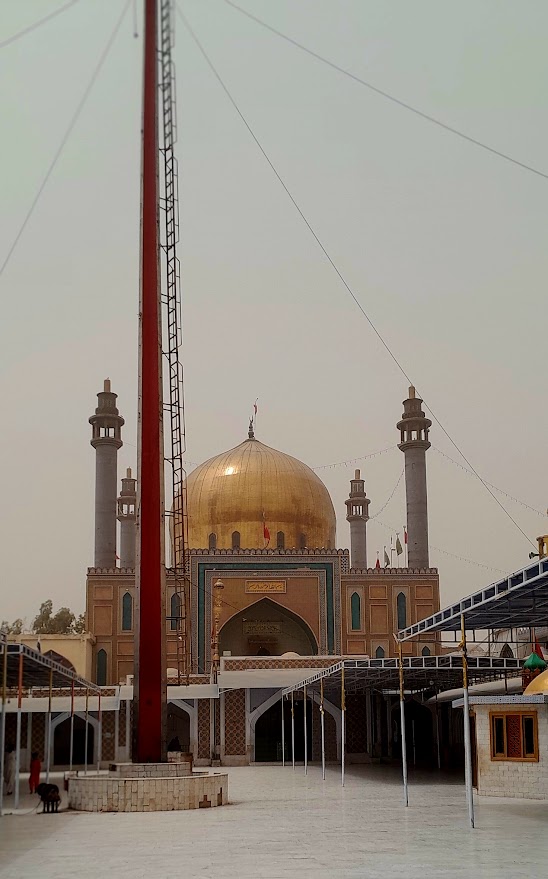
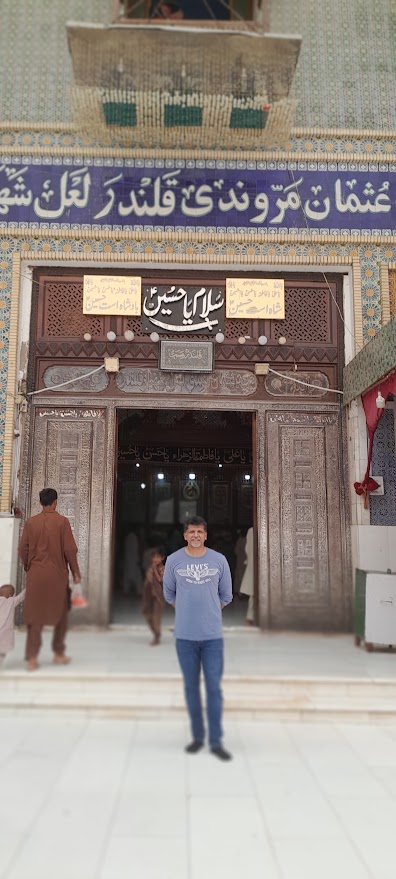
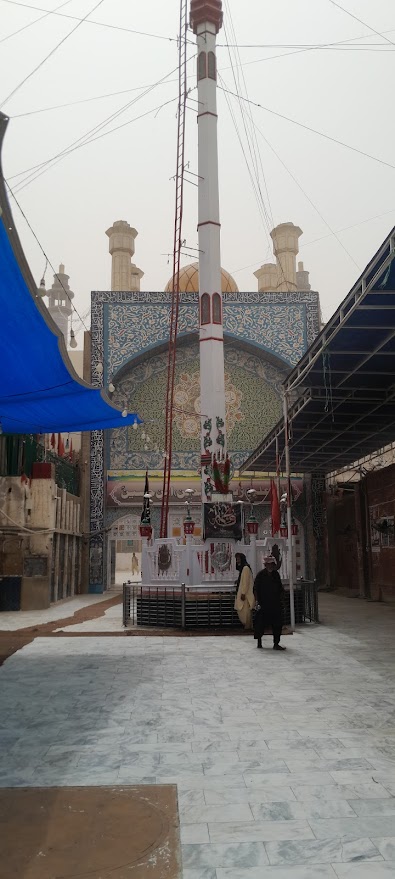
A similar opportunity to visit Sehwan arose when travelling to Sukkur form Karachi. The journey which covers a distance of about 285 km, took roughly four and a half hours via the M9 motorway and the adventurous Indus Highway, we stopped on the way at Sunn city to pay homage to the Sindhi revolutionary G.M.Syed fondly known here as ‘Sain’. Rolling into Sehwan by afternoon, the first thing that hits you is the energy. This is no sleepy town. The air is thick with the scent of incense, rose petals, and something deeper—hashish smoke curling from the lips of wandering malangs (mystics) . The main road to the shrine is a bustling, chaotic bazaar, far more vibrant than any we had seen in Larkana or Sukkur . Stalls overflowed with everything imaginable: dried fruits, colourful bangles, Sindhi caps and of course offerings for the Shrine.
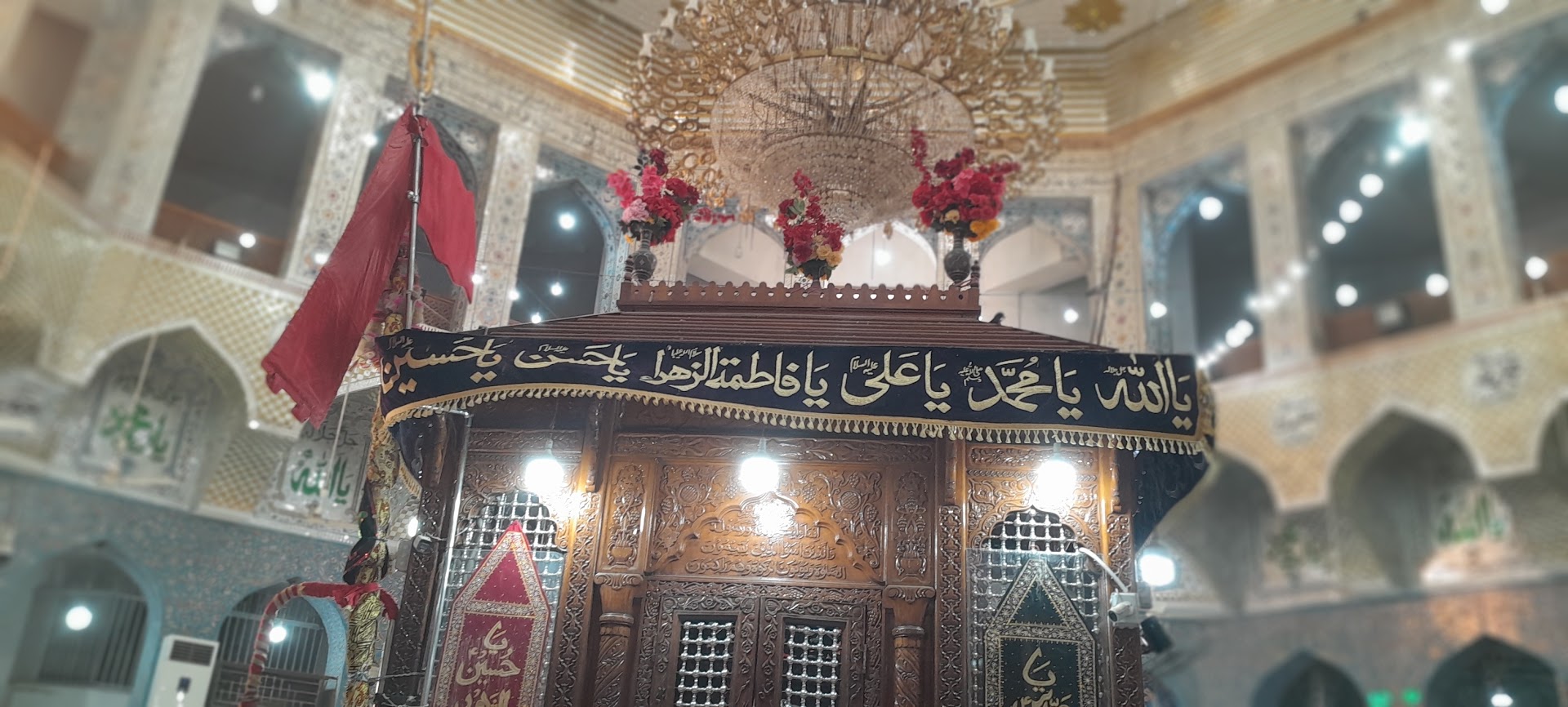
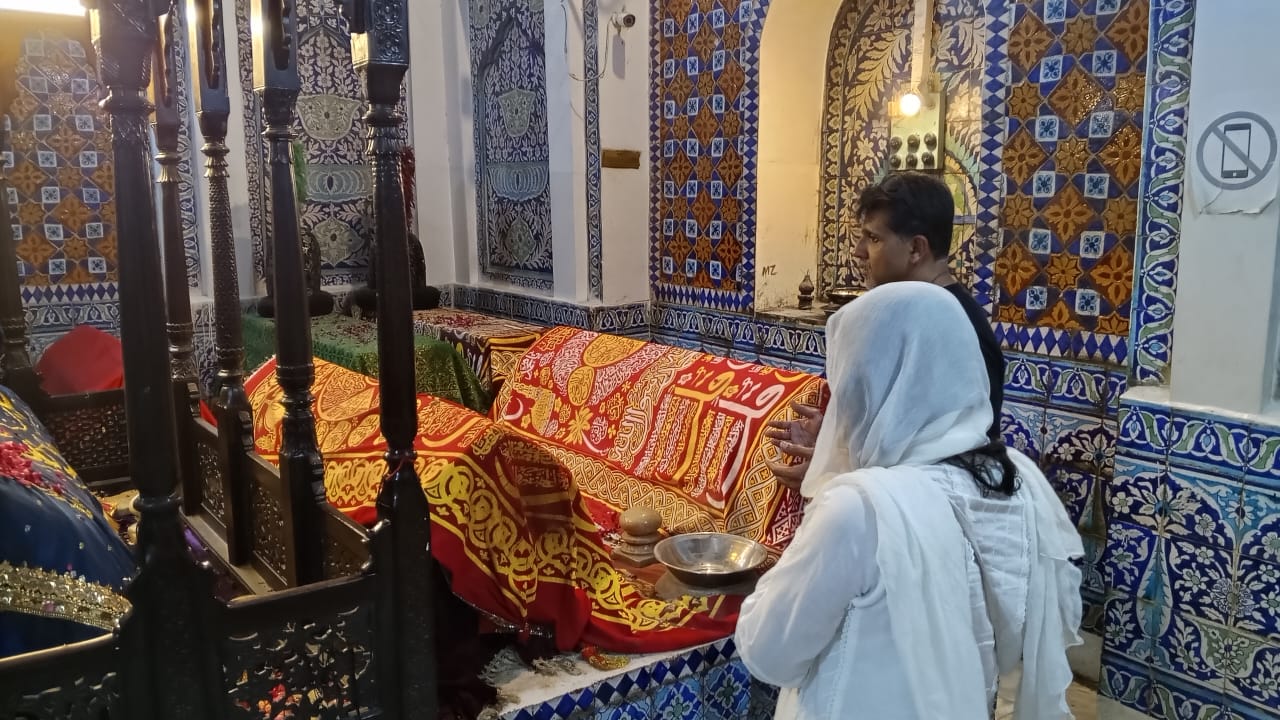
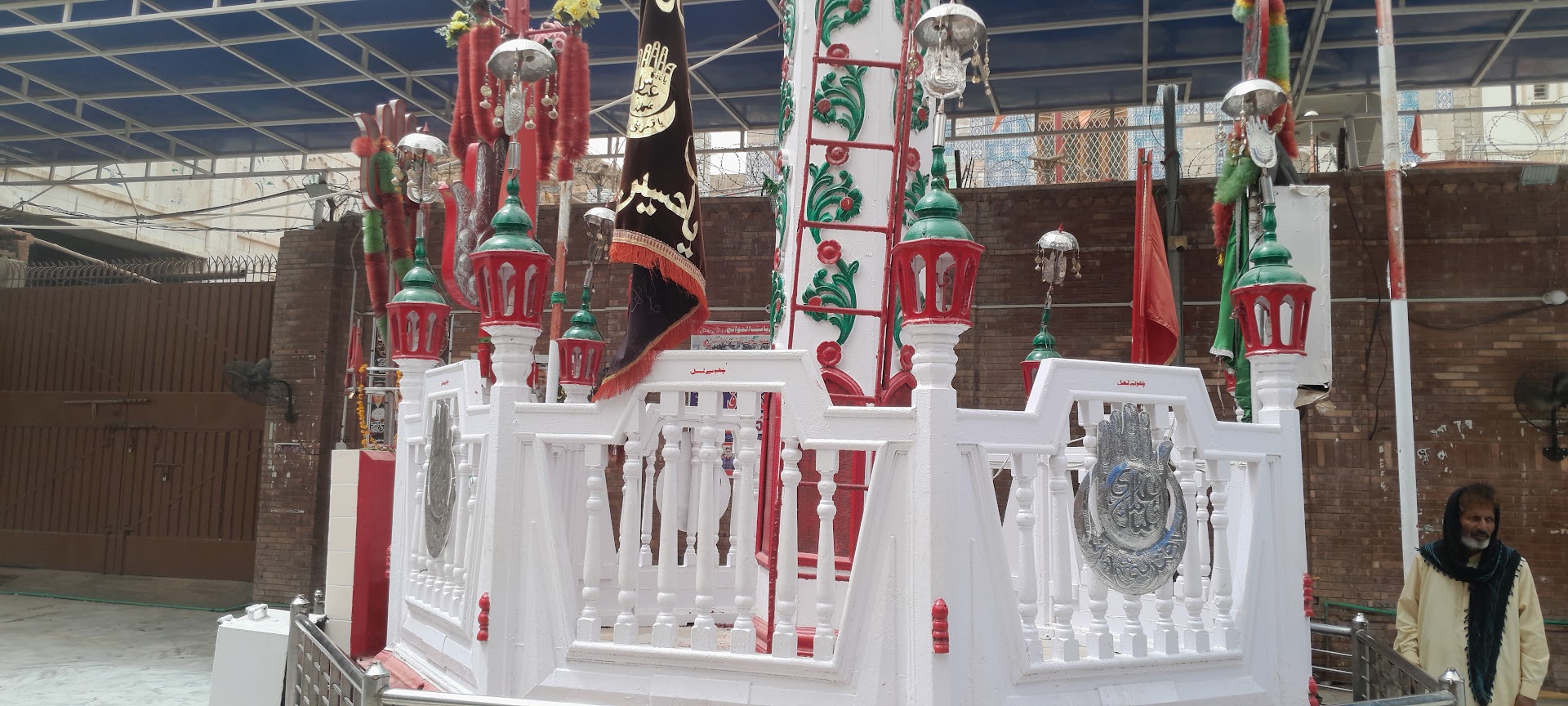
Approaching the shrine complex is an experience in itself. We had to navigate through police barricades towards the glistening gold dome ahead . The security is intense, since an unfortunate attack a few years back from a puritanical group that frowns upon the inclusive sufi traditions. The Shrine of Lal Shahbaz Qalandar is breathtaking. The original structure was built in 1356, but it has been expanded and adorned over centuries . The most striking feature is the massive, 110-foot-tall gilded dome, covered in gold-plated tiles from the UAE, which shines like a small sun . The exterior features intricate Sindhi-style tile work, while the interior is a dazzling cave of mirror-work and white marble. The saint’s grave lies under the central dome, covered by a silver canopy and surrounded by a silver railing . At his feet, a row of small earthen oil lamps flicker, reminiscent of Hindu ceremonies, a testament to the syncretic culture of the region . On one side of the marble floor are wooden stands holding copies of the Quran for devotees, while the other side is heavy with the smoke of burning incense. We also noted the gold-plated main door, a magnificent gift from the last Shah of Iran, Mohammad Reza Pahlavi. There are several other tombs of his disciples and devotees in the complex. The heart of Sehwan is the evening dhamaal, the ecstatic, trance-inducing dance performed to the rhythm of the naubat (kettledrums), although we had to miss this as we were scheduled to be in Sukkur that evening. he dhamaal is not a choreographed dance; it is a whirlwind of devotion with malangs in their signature red tunics (Lal Shahbaz’s chosen colour) began to spin, their bodies swaying, their faces lifted in a state of ecstatic surrender joined in by the throngs of devotees.
Visits to these shrines are somewhat marred by the constant pressure of tithing and giving alms by the attendants which sometimes feels rather unwarranted and contrary to the spirit of the place. Another thing to be carful about are the pickpockets and petty criminals that find the crowded streets around the shrine to be a convenient place to ply their trade. However there are minor inconveniences and at least for me not something that would keep me away form visiting these spiritual and uplifting venues. I hope to visit the many shrines of Sindh in the not too distant future, as each one is a unique experience in itself despite sharing many commonalities of ritual.

 The Open Roads